Need help with ICT Coursework?

Here is an example of some coursework which describes the different properties of bitmap and vector images. Read more here!

History being a jumble?

Click here if you would like to find more about Mussolini and the Abyssinian Crisis during the 1930s!

Need inspiration for Controlled Assessment?

If you would like to read about my experience with the DigCom controlled assessment, see my work, and look for inspiration, read this page!

Stuck with essay writing?

Read this page about my English Literature Controlled Assessmenr on 'The Merchant of Venice'. Pick up structure techniques and ideas!

Evaluations doing your head in?

Here, you will find my example of an ICT evaluation, comparing 2 different advertisements. Collect ideas for your design and graphics coursework!

Wednesday, 30 October 2013

The Importance of Jesus' Suffering, Death & Ressurection

For the Mark's Gospel GCSE, you will need to be able to answer Evaluation Questions. If you click the massive PDF link below, you will be lead to a page where you can read notes and about the significance of all passages from Chapter 11 onwards! Making this certainly helped me have more ideas when answering evaluation questions ~ READ IT!!! :)


Tuesday, 29 October 2013

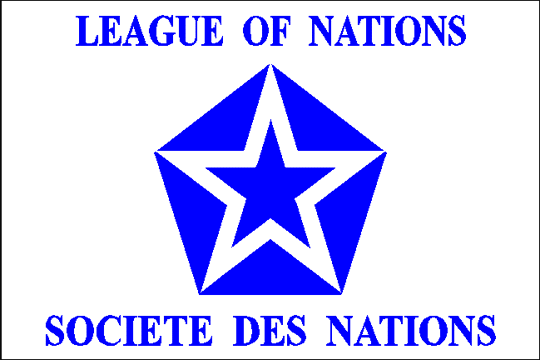
An Introduction to the League of Nations


Why was the League of Nations created?

Before WW1, the alliance system was in place which divided Europe into 2 main alliances: The Triple Entente and the Central Powers. These alliances were where the main powers had agreed to have each other's backs, meaning that if one of the countries were in the midst of a dispute, the entire alliance would have to come in to help sort it out.

However, the alliance system had led to WW1. After the murder of Duke Franz Ferdinand, a dispute of 2 countries had led to the dispute of the entire world. 

After WW1, the League was made in the Paris Peace Conference to act as an international police in the place of an alliance system for all the countries. The idea was made by Woodrow Wilson, however, he was not a part of it which were on of the reasons for its failure.

The League's Aims

The League of Nations had 4 main aims:
  1. To discourage aggression from any nation
  2. To encourage countries to co-operate, especially in business and trade
  3. To encourage nations to disarm
  4. To improve the living and working conditions of people in all parts of the world.
Aims 1 & 3 were the most important of the 4 main aims, but the ones that weren't succeeded. The League's court of international justice tried to solve boarder disputes but they simply did not have power. They could suggest ideas to try and solve the issue, but could never enforce or check whether what they had said had been done. The disarmament aim was a complete failure. Countries did not trust each other enough to disarm, and instead rearmed.

Aim 2 was not successful after the Wall Street Crash in which started in 1929. America, which was the main trading country, was forced to stop trading with certain countries which stirred up aggression - ie the Manchurian Crisis.

Aim 4 was partially successful. Although the League was unable to enforce ideas onto other countries, it was able to campaign and persuade other countries to carry out the League's ILO's (international labor organisation) recommendations. The ILO and League's commissions/committees were also able to take refugees back to their homelands, make working conditions safer, defeat dreaded diseases such as leprosy and free slaves.

How did the failures of the League of Nations contribute to WW2?


There were many things that the League was lacking which had led to its failure. Here, I will describe some reasons as to why Hitler disregarded the League, and why WW2 started.

The League did not have an army

Although Clemenceau, the leader of France, had said that the League should own it's own army, it did not. This was because Britain and other countries were selfish with their men. In the Paris Peace Conference, the leaders had come to decision that if a dispute was to happen, and a country had came to its 3rd warning, the central powers of the League were to send their own men on behalf of the league.

However, at the end of the day, Britain and France (the main leaders of the League) had their own interests and economies to worry about - they did not send their own men. For this reason, many boarder disputes, such as the dispute at Vilna - 1920, had ended unsolved. Hitler did not acknowledge the League as a proper enemy, but as weak, furthering his aggression.

The Geneva Protocol

The Geneva Protocol made the League look weak; it proved to Hitler that they were not worth recognizing as an enemy. There were two reasons to this:
  1. The Geneva Protocol was drawn up by Britain and France in 1924. It was designed to back up the League's decision. When it was made, it was to enforce what the League had said. It made the League look weak; it made the League look as though it couldn't do its own job by itself.
  2. Just before the Geneva Protocol was about to be signed, Britain had decided not to go through with it. They were afraid that the Protocol might end up making them do something against their interest. This made both Britain and the League look weak. Britain made themselves look unorganized, and as it was a main leader of the League, it made the League look unorganized.

The Manchurian & Abyssinian Crisis

In both crises, the aggressor had gone against the League and gotten away with it. This is what originally gave Hitler the idea of also going against the League. The crises had been the final proof that the Leage was weak.

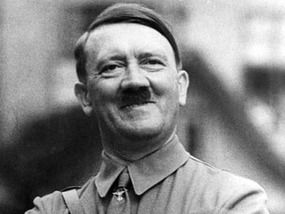
Hitler's Motives


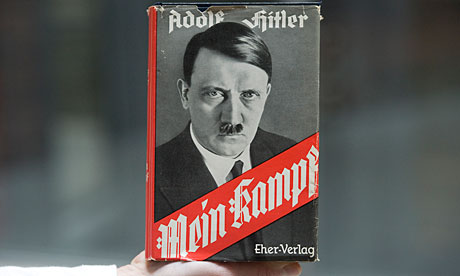
Hitler had published all of his motives publicly, to the world, in 'Mein Kampf' - the book that he had wrote while he was in prison. He published this book in 1924, however, between 1933 and 1939, his plans came to life. 

Funfact :3 : In most books, 'the' is the most used word, however in 'Mein Kampf', the most used word was 'Jew'

Here were Hitler's 3 main motives:

Defeat Communism!

Hitler was completely anti-Communist. He had hoped to go to war with the Soviet Union in order to colonize them, and turn them anti-Communist too. He had believe that the first world war and the treaty of Versailles were as a result of the Bolsheviks. The propaganda in 'Mein Kampf' boldy points this out:
"Germany is the next objective of Bolshevism."

 Abolish the Treaty of Versailles!

Hitler absolutely despised 'The Treaty of Versailles' as it was a constant reminder of Germany's loses - he was a man obsessed with turning Germany and Austria (the country in where he was born) into great countries. He hated it so much that he called the leaders who had signed the treaty as 'November Criminals' despite how much they tried to avoid signing it. The treaty had made the country weak, and Hitler wanted to solve this.

Expanding German Territory!

As I had said before, Hitler was obsessed with trying to make Germany a great country. To most people's surprise, he had admired Britain and their navy, and aspired to be as great as them. Hitler aimed to unite with Austria, and to take back the countries that he had lost in the treaty of Versailles. He aimed to make more 'Lebenstraum' (living space) for the German people.

The Treaty of Neuilly, 1919 - Bulgaria


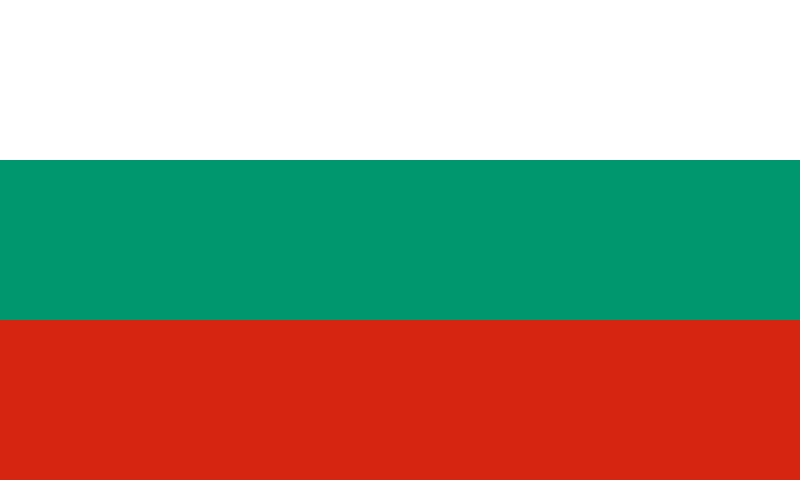
File:Flag of Bulgaria.svgThe Treaty of Neuilly is an easy treaty to learn as it didn't have many terms. Bulgaria played only a small part in WW1, and therefore wasn't treated very harshly. However, they were still punished, and some land was taken away from them to help build the new countries etc.
To read about the other treaties, please click the following links:

TERMS:
  • Bulgaria is to lose parts of her own land to help create Yugoslavia.
  • She is to also give parts of her own land to Greece and Bulgaria
  • Bulgaria is to pay £100million reparations from WW1
  • Bulgaria is allowed no more than 20,000 men in its armed forces
MORE INFORMATION:
  • Although this treaty was not as harsh as the other treaties created in the Paris Peace Conference, it still had Bulgarians that were part of its former population being governed by foreign powers.